Understanding RV Insurance Coverage in Port St. Lucie: Hail vs. Storm Damage
When you own an RV in Port St. Lucie or anywhere along Florida's Treasure Coast, weather isn't just a weekend forecast - it's a genuine business risk. The difference between a routine service call and a catastrophic repair bill often comes down to one thing: what your insurance actually covers. Hail and storm damage are two of the most common RV insurance claims in St. Lucie County and neighboring areas like Tradition, St. Lucie West, and Stuart, yet many owners remain confused about whether their policy will pay. The reality is that coverage varies dramatically depending on your policy structure, your insurer, and the specific cause of damage. Understanding these nuances before a storm hits is critical to protecting your investment.
RV insurance typically comes in three main flavors: liability only, collision, and comprehensive. Liability coverage - the minimum required in Florida - protects you if you injure someone or damage their property with your RV. It does absolutely nothing for your own rig if hail dents your roof or a storm topples a tree into your slides. Collision coverage helps pay for damage from accidents involving other vehicles, but again, weather is generally excluded. Comprehensive coverage, however, is where hail and storm protection lives. This is the policy add-on that covers theft, vandalism, weather events, and acts of God. In Port St. Lucie's subtropical climate, where Atlantic hurricanes, summer thunderstorms, and surprise hail events are part of life, comprehensive coverage is not optional - it's essential.
What Does Comprehensive RV Insurance Actually Cover?
Comprehensive RV insurance is designed to cover losses to your RV that are not caused by a collision or normal wear and tear. In Florida, particularly in areas like Port St. Lucie, Tradition, and PGA Village, this includes hail damage, wind damage, lightning strikes, flooding, and fallen trees. If a summer storm tears your Carefree or Solera awning clean off, that's typically covered. If hail punctures your roof or dents your aluminum body, comprehensive usually pays (minus your deductible). If a hurricane-force wind flips your rig or a lightning strike fries your Dometic refrigerator and Suburban furnace, comprehensive is your safety net. However - and this is critical - coverage limits, exclusions, and deductibles vary wildly between insurers. Some policies cap coverage at the actual cash value of your RV; others use agreed-upon value. Some have sub-limits for specific items like awnings or air conditioners. Always read the fine print, especially if you're a snowbird who stores your RV in Port St. Lucie during hurricane season.
The tricky part is that 'storm damage' is not a monolithic category. If your RV is damaged by a named hurricane declared by NOAA, your claim likely falls under 'hurricane deductible,' which is often $500 - $2,500 and separate from your regular deductible. If a summer thunderstorm damages your rig, you might only owe a $250 - $500 regular deductible. If it's hail, it might again be different. And if the damage results from something you did (like not securing your awning before a storm), some insurers may deny the claim entirely or classify it as negligence. This is why having a trusted local repair shop - one familiar with Port St. Lucie's climate and insurance claim processes - is invaluable. Our RVIA-certified team has filed hundreds of storm damage claims with insurers and understands exactly what documentation, photos, and repair estimates adjusters need to approve payment quickly.
Hail Damage vs. Wind Damage: Different Coverages, Different Claims
In Port St.Lucie and surrounding areas of St. Lucie County, hail and wind damage are often lumped together in conversation but treated separately by insurers. Hail damage is typically covered under comprehensive if you have it; wind damage is too. But the distinction matters for claims. Hail creates small, localized dents or punctures - often on the roof, hood, or upper surfaces of your RV. Wind damage is more chaotic: bent frames, torn metal, compromised seals, and displaced components. A hailstorm might ding your Lippert slide-out mechanisms or puncture your roof with small holes; wind from a tropical storm might actually bend the slide-out frame, tear away sections of siding, or lift and reposition the entire roof section. Wind damage also often leads to secondary damage - water intrusion, mold, corrosion - especially in Florida's salt-air environment. If you live in Jensen Beach, Hutchinson Island, or other coastal areas of the Treasure Coast, salt-air corrosion frequently accelerates after wind damage, turning a $2,000 repair into a $6,000 restoration. This is why photographic evidence and prompt repair estimates are crucial; the longer water sits inside an RV, the more corrosion spreads through aluminum, wiring, and cabinetry.
Some insurers also distinguish between 'named storm' (hurricane) and 'unnamed storm' (thunderstorm, straight-line wind, hail). Named storms often have higher deductibles (sometimes $1,000 - $2,500 in Florida) because they're predictable and avoidable; if a hurricane is forecast, insurers assume you should evacuate or prepare. Unnamed storm coverage typically has lower deductibles ($250 - $500). But this varies by policy. Progressive, State Farm, NAPA, Good Sam, and other major RV insurers all structure their named-storm deductibles differently. Some tie it to a percentage of your RV's value; others use a flat dollar amount. If your RV is financed or leased, your lender may require specific coverage limits. It's always worth calling your agent before storm season and asking these exact questions: 'What's my hurricane deductible? What's my unnamed storm deductible? Does hail have its own sub-limit? Are awnings covered the same as the body? What if water damage results from the initial impact - is that covered?' In Port St. Lucie, Tradition, and St. Lucie West, these questions often mean the difference between a fully covered repair and an out-of-pocket expense.
Common RV Components Damaged in Florida Storms: What Your Policy Should Cover
| Component | Storm Damage Type | Typical Repair Cost Range | Usually Covered Under Comprehensive? |
|---|---|---|---|
| Roof (EPDM or TPO membrane) | Punctures, tears, hail damage | $800 - $3,500 | Yes, minus deductible |
| Awnings (Carefree/Solera) | Torn fabric, bent frame, loss | $600 - $2,800 | Often, but verify sub-limits |
| Slide-out (Lippert mechanism) | Bent frame, water intrusion, motor failure | $1,200 - $4,500 | Yes, if structural; parts vary |
| Air Conditioner (Dometic/Truma) | Compressor damage, refrigerant loss, housing damage | $1,000 - $3,200 | Typically yes; verify coverage |
| Fresh water tank (Thetford/Atwood) | Cracking, fitting damage, valve breakage | $400 - $1,200 | Usually yes |
| Furnace (Suburban/Atwood) | Fuel line damage, ignition failure, housing | $600 - $1,800 | Yes, if directly storm-damaged |
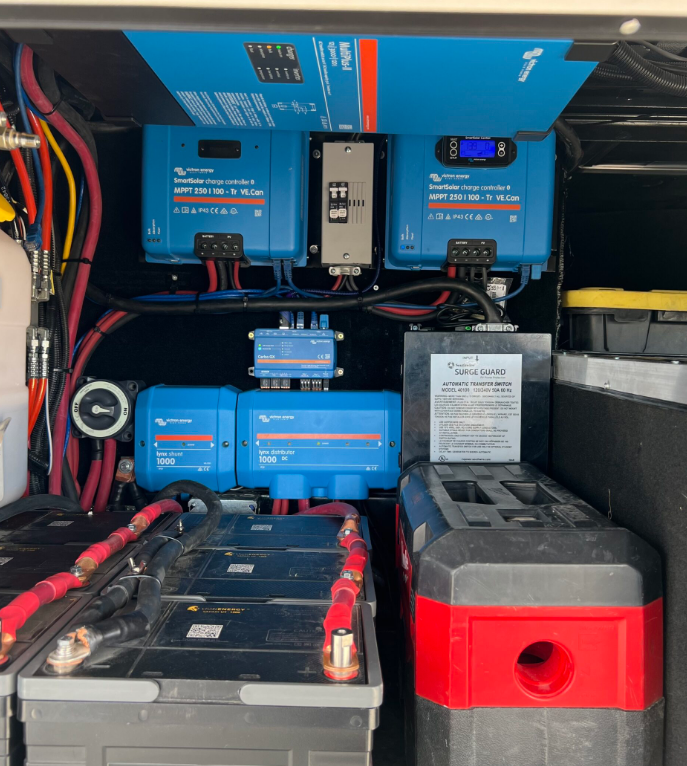
| Electrical system (Progressive Dynamics/Victron) | Lightning strike, surge damage, converter failure | $800 - $2,500 | Sometimes; surge coverage varies |
| Battery bank (AGM/LiFePO4/Battle Born) | Thermal damage, terminal corrosion, cell failure | $500 - $3,000 | Rarely; usually excluded |
| Plumbing (PEX lines, fixtures) | Freeze cracks, impact damage, seal failure | $400 - $1,600 | Yes, if storm-caused; not if weather-neglect |
| Windows and seals (Dicor sealant, gaskets) | Broken glass, seal separation, water entry | $300 - $1,200 | Yes, usually without sub-limit |
The repair costs above are representative of what we see daily in Port St. Lucie and across our Treasure Coast service area - which includes Tradition, St. Lucie West, Tesoro, PGA Village, Stuart, Fort Pierce, Jensen Beach, Palm City, Hobe Sound, Hutchinson Island, and Vero Beach. Each of these areas faces similar Atlantic hurricane risk and salt-air corrosion challenges. When a storm hits, the components listed above are most vulnerable. Your comprehensive insurance should cover direct damage to all of them, but sub-limits and exclusions are common. For example, your policy might cover roof damage up to $3,000 total, or awning damage only if the awning was properly stowed. Some policies exclude battery banks entirely, treating them as wear items. Our team routinely helps clients understand what their policy covers by reviewing the claim language with them and estimating repairs in a way that aligns with their coverage. We've also worked with insurance adjusters across St. Lucie County long enough to know which insurers are easy to work with and which tend to low-ball estimates. This experience saves our clients thousands in denied or under-paid claims.
Hurricane Season in Port St. Lucie: Why You Need Storm Damage Coverage Now
Atlantic hurricane season runs from June 1 to November 30, and for RV owners in Port St. Lucie, Tradition, and throughout St. Lucie County, that's six months of genuine risk. Florida sits directly in one of the world's most active hurricane corridors. In the past 30 years, St. Lucie County has been directly impacted by multiple major hurricanes, and numerous tropical storms have caused widespread RV damage. If your RV is parked in a campground or storage facility in Port St. Lucie during hurricane season without comprehensive coverage, you're betting your entire investment on luck. Comprehensive insurance is relatively inexpensive - typically $200 - $600 per year depending on your RV's value, age, and where it's stored - and far cheaper than repairing a roof that's been stripped by 120-mph winds or a rig that's been flooded by storm surge in a low-lying area like Jensen Beach or Hutchinson Island. Snowbirds who winter in Port St. Lucie or Tradition often underestimate this risk because they're used to milder climates up north. They park their RV for the season, assume it's fine, and skip comprehensive coverage to save a few dollars. Then a hurricane approaches, and suddenly they're paying $3,000 - $8,000 out of pocket for emergency repairs because comprehensive coverage is not retroactive. In our experience serving Port St. Lucie and PGA Village for years, this is the number one regret we hear: 'I wish I'd added comprehensive before the storm hit.'
Florida's weather isn't limited to hurricanes, either. Summer thunderstorms roll through Port St. Lucie, St. Lucie West, and Stuart with violent regularity, producing hail, lightning, and straight-line winds. Spring squalls can be just as damaging as named storms. In 2023 and 2024, St. Lucie County experienced several significant hail events that damaged hundreds of RVs. Many owners discovered that their policies didn't include hail coverage or had very low sub-limits ($500 - $1,000). A single hailstorm can produce $2,000 - $5,000 in damage; without comprehensive or hail coverage, the owner eats the entire bill. This is why we strongly recommend reviewing your policy every year before June, especially if you're storing your RV in Port St. Lucie, Tradition, or any coastal area of the Treasure Coast. Ask your agent point-blank: 'If a hurricane hits St. Lucie County tomorrow, what will I receive from my claim, and what will I owe?' If the answer is anything less than 100% of damage minus a reasonable deductible, your coverage is insufficient.
Steps to File an RV Storm Damage Claim Successfully
Document Damage Immediately with Photos and Video
As soon as storm damage occurs - and only when it's safe to inspect - take clear photos and video of all affected areas. Capture wide shots of your RV's exterior, close-ups of dents, tears, or punctures, and interior damage like water stains or mold. Take photos during daylight if possible. Time-stamp your images if your phone camera supports it. This documentation is critical because insurance adjusters need to see the damage in its original state. Many owners delay documentation or rely on memory, which weakens their claim. In Port St. Lucie and surrounding areas, storm debris and standing water can obscure damage; document first, clean later.
Contact Your Insurance Company Within 24-48 Hours
Don't wait weeks to file a claim. Call your insurance company's claims line immediately after a storm. Provide your policy number, location of the RV (Port St. Lucie, Tradition, etc.), and a brief description of damage. Ask for a claim number and the name of your assigned adjuster. Many insurers now allow you to file claims via their mobile app or website; use this to expedite processing. If your RV is in an area with widespread damage (like after a named hurricane in St. Lucie County), the claims queue may be long; filing early ensures you're in line. Keep a record of every conversation, including names, dates, and what was discussed.
Obtain a Professional Damage Assessment and Repair Estimate
Before any repairs begin, hire a certified RV repair shop - like Port St. Lucie RV Repair - to inspect your RV and provide a detailed written estimate. This estimate becomes your claim's foundation. Adjusters often low-ball repairs based on their own (sometimes limited) knowledge; a professional estimate protects you. Our RVIA-certified technicians have inspected hundreds of storm-damaged RVs across Port St. Lucie, Tradition, St. Lucie West, and the Treasure Coast. We break down each repair component, list parts and labor separately, and explain what's needed to restore your RV safely. This specificity helps insurers approve your claim and justifies higher repair costs. We'll also note any secondary damage (water intrusion, corrosion, mold) that resulted from the initial storm impact.
Submit Estimate and Supporting Documentation to Your Adjuster
Send your repair estimate, photos, and a summary letter to your assigned adjuster. Include your claim number on all documents. Explain the damage clearly and reference the policy section you believe covers it (comprehensive, named storm, etc.). If you believe certain damage is covered but your estimate doesn't mention it, call your adjuster and discuss. For example, if a storm-damaged awning allowed water into your RV, causing plumbing or electrical damage, that secondary damage is often covered too - but only if you explicitly document the cause-and-effect relationship.
Authorize Repairs Only After Claim Approval
Once your adjuster approves the claim and authorizes payment (or agrees to pay after repairs are complete), schedule your repairs with your chosen shop. In Port St. Lucie, St. Lucie West, and Tradition, we typically offer same-day service for storm damage assessments and can often begin emergency repairs within 24 - 48 hours. Do not authorize major repairs before adjuster approval unless it's a safety issue (like a roof hole that will cause mold growth). After repairs are complete, submit final invoices and photos of the finished work to your adjuster to finalize payment.
What If Your Insurer Denies Your Storm Damage Claim?
Unfortunately, claim denials happen - and they're often based on technicalities rather than genuine lack of coverage. Common denial reasons include: 'damage was pre-existing and not caused by this storm,' 'your policy was not in force at the time of loss,' 'you failed to maintain your RV properly,' or 'this damage is excluded under your policy's specific language.' If your claim is denied or under-paid, you have options. First, request a detailed written explanation from your insurer. Insurance companies in Florida are required by law to explain their reasoning. Second, have your repair shop review the denial. We've often found that adjusters misunderstood the scope of damage or miscategorized what was covered. Third, file an appeal with your insurer, providing additional documentation or a second professional opinion. If your RV was in Port St. Lucie, Tradition, or St. Lucie West when damaged, you have appeal rights under Florida law. If the dispute remains unresolved, you can file a complaint with the Florida Department of Insurance or consult an attorney. Don't assume a denial is final; many are reversed after appeal.
This is also where a trusted local repair shop becomes invaluable. We've helped countless Port St. Lucie and Tradition residents appeal denied claims by providing detailed technical explanations of why damage was storm-related, not pre-existing. We've also helped clients understand when a denial was legitimate and when they needed to escalate. Our RVIA certification and years of experience in St. Lucie County give us credibility with insurers and adjusters. If you're facing a denial and need help, call us at 772-276-6465 or email [email protected]. We're happy to review your claim and offer guidance.
Related Storm Damage Repairs We Handle in Port St. Lucie and Surrounding Areas
Storm damage often extends beyond the initial impact. Water intrusion from a roof puncture or wind damage can cascade into mold growth, electrical damage, and plumbing failures. This is why comprehensive repair after a storm is critical. Our Port St. Lucie team handles all aspects of storm damage restoration:
- Roof and Ceiling Repairs: We repair punctures, tears, and delamination in EPDM and TPO membranes. Hail damage, wind tears, and impact damage from debris are our daily work. We also inspect and reseal any compromised fasteners or Dicor sealant joints. See our roof and slide-out repair page for details.
- Water Damage and Mold Remediation: When a roof or window seal fails, water intrusion happens fast. We perform moisture detection, remove wet insulation or cabinetry, treat mold, and ensure proper ventilation and drying. This work often prevents catastrophic structural failure.
- Awning Replacement: Torn or destroyed Carefree or Solera awnings are common after storms. We remove damaged awnings and install new ones, ensuring proper mounting and secure fastening. Learn more on our awning repair page.
- Electrical System Repair: Lightning strikes and surge damage can fry Progressive Dynamics converters, Victron charge controllers, and wiring. We diagnose electrical damage, replace components, and install surge protection to prevent future issues.
- Plumbing System Repair: Frozen pipes, impact damage, and water intrusion can compromise PEX lines, fittings, and tanks. We repair or replace damaged plumbing components and ensure proper sealing. Visit our plumbing repair page for more information.
- HVAC System Repair: Dometic and Truma air conditioning units, Suburban and Atwood furnaces, and other climate control systems are vulnerable to storm damage. We repair or replace damaged components and restore full function. See our AC and heating repair page.
- Slide-out Mechanism Repair: Lippert slide-outs can be bent or damaged by wind or impact. We straighten frames, replace motors, and restore sealing to prevent water intrusion. This is often a key insurance claim item because slide-out damage is both expensive and obvious.
Why Choose Port St. Lucie RV Repair for Your Storm Damage Assessment and Repairs?
When a storm damages your RV in Port St. Lucie, Tradition, St. Lucie West, or anywhere across the Treasure Coast, you need a repair shop that understands both RV systems and Florida's insurance landscape. Our team is RVIA certified, has 4.9 stars across 189 reviews, and specializes in storm damage repairs. We're familiar with every major RV manufacturer's systems - Dometic, Thetford, Lippert, Suburban, Onan, Truma, and more - and we understand how storm damage propagates through interconnected systems. We also speak insurance. We've worked with hundreds of adjusters across St. Lucie County, and we know how to document damage, justify repairs, and help clients maximize their claims. When you bring your RV to us after a storm, we don't just fix the obvious damage; we perform a thorough inspection to catch secondary damage that may not be immediately visible but will cause problems later. Water stains, corrosion, electrical burnout, and mold growth are often hidden consequences of storm impact. By catching these early, we save you thousands in future repairs.
Our service area covers Port St. Lucie, Tradition, St. Lucie West, Tesoro, PGA Village, Stuart, Fort Pierce, Jensen Beach, Palm City, Hobe Sound, Hutchinson Island, and Vero Beach. We offer same-day service in Port St. Lucie, Tradition, and St. Lucie West, and we waive service trip fees for jobs over $400 in labor. We're also mobile, so we can come to you - whether your RV is in a campground, storage facility, or your driveway. After a storm, this convenience is invaluable; you don't have to tow a damaged RV to a shop. We come to you, assess the damage on-site, and provide a detailed estimate within hours. Call us at 772-276-6465 or email [email protected] to schedule your storm damage assessment today.
Florida Building Code Compliance and Storm-Hardened RV Repairs
Florida has some of the most stringent building codes in the nation, and the 8th Edition of the Florida Building Code (effective as of recent updates) reflects decades of hurricane damage data. While this code primarily applies to stationary structures, the principles - proper sealing, wind-resistant fastening, moisture barriers, and material durability - are equally relevant to RV repairs in Port St. Lucie and across the state. When we repair storm damage, we apply Florida Building Code principles to our work. This means using high-grade sealants like Dicor, ensuring fasteners are properly torqued and sealed, and choosing materials that resist salt-air corrosion and UV exposure. For example, after a roof repair in Hutchinson Island or Jensen Beach, we don't just patch the hole; we reinforce the repair zone with additional fasteners and sealant, knowing that coastal salt air will aggressively corrode any exposed metal. This proactive approach costs a bit more upfront but ensures your repair lasts 10+ years rather than 3 - 5. It also makes your repair more attractive to insurance adjusters, who understand that storm-hardened repairs reduce future loss frequency.
Preparing Your RV for Storm Season: Insurance and Maintenance Tips
The best insurance claim is the one you never have to file. Before storm season arrives in Port St. Lucie or Tradition, take these proactive steps to minimize risk and ensure your coverage is adequate: First, review your insurance policy and confirm you have comprehensive coverage with a reasonable deductible ($250 - $500). Confirm your hurricane deductible and confirm it's not so high that a major storm leaves you exposed. Second, inspect your RV's roof, seals, awnings, and windows. Any existing damage or deterioration will be worsened by a storm. Address maintenance issues now, not after a hurricane. Third, ensure your RV is properly stored. If it's in a campground or facility in Port St. Lucie or St. Lucie West, confirm that the facility is elevated and has adequate drainage. Low-lying areas near Jensen Beach or Hutchinson Island are at higher hurricane surge risk; consider relocating your RV to higher ground during peak season. Fourth, secure all external items - awnings, antennas, ladders, propane bottles. Unsecured items become projectiles and can damage your RV or others. Some insurance policies exclude damage that results from negligence, like failing to secure an awning before a known storm. Fifth, keep your insurance agent's contact information and your policy documents easily accessible. In a major storm event, cell towers may go down; have this info backed up. Finally, choose a trusted local repair shop now, before you need one. Building a relationship with Port St. Lucie RV Repair before a disaster ensures you can get fast, expert help when a storm strikes. We'll be there for you, and we're familiar with the claims process in St. Lucie County.