Why Hurricane Prep Matters for RV Owners in Port St. Lucie
Port St. Lucie and the surrounding Treasure Coast region face genuine hurricane risk every year from June through November. Unlike traditional homes, RVs lack the structural reinforcement, anchoring systems, and permanent storm-resistant features that protect brick-and-mortar properties. An RV parked in Tradition, St. Lucie West, Tesoro, or PGA Village during an active hurricane faces exposure to winds exceeding 100 mph, salt-spray damage, flooding, and loss of utilities that can total tens of thousands of dollars in repairs. The Florida Building Code 8th Edition requires permanent structures to meet specific wind and water resistance standards, but RVs are mobile units and demand their own specialized preparation strategy. Moreover, the coastal environment of Port St. Lucie introduces year-round salt-air corrosion that weakens seals, electrical connections, and structural integrity even outside hurricane season. By investing in proactive hurricane prep now, you avoid catastrophic mid-season emergencies and the inability to find repair technicians when the entire region is overwhelmed by storm damage.
RVIA-certified repair facilities like Port St. Lucie RV Repair understand that hurricane prep is not a one-time checklist but a systematic inspection and maintenance regimen specific to our subtropical climate. Whether you're a full-time resident in Stuart, a seasonal visitor to Jensen Beach, or a snowbird staging your RV in Palm City before heading south, the stakes are identical: your RV must be storm-ready before the first system develops.
Roof, Seals, and Structural Integrity Assessment
The roof is your RV's primary defense against water intrusion during heavy rain and storm surge. In Port St. Lucie and throughout St. Lucie County, salt spray accelerates degradation of roof membranes, making even small cracks and gaps into pathways for water damage. The two most common RV roof materials are TPO (thermoplastic polyolefin) and EPDM (ethylene propylene diene monomer). Both materials are durable, but they require annual inspections and resealing, especially in our high-humidity, salt-laden environment. Dicor, a leading manufacturer of RV roof sealants and coatings, recommends inspecting seams, vents, and skylights every 12 months. Any hairline crack, discolored patch, or separation in sealant must be addressed immediately. During a full hurricane-prep inspection, certified technicians examine the entire roof surface, checking for ponding water (which can pool and weaken the membrane), verifying that all penetrations (vents, antennas, air conditioners, solar panels) are securely fastened and sealed, and confirming that the rubber boots around these fixtures are intact and pliable. Roof inspection and resealing services in Port St. Lucie typically cost $200 - $600 depending on RV length and material condition, with same-day availability common in the PSL area. For more details on roof and structural work, visit our RV Roof & Slideout Repair page.
Beyond the roof itself, inspect all exterior seams, joints, and transitions where the roof meets the sidewalls. These areas are prone to micro-cracks and sealant failure. Weather stripping around doors, windows, and compartment hatches should be supple and intact; hardened or cracked weather stripping allows wind-driven rain to enter. Slideouts on many modern RVs are especially vulnerable in high winds because they project from the main body and face increased pressure. Ensure that slideout seals are clean, flexible, and properly seated. Some owners in Hutchinson Island and Vero Beach have reported increased slideout damage during the past three seasons due to extended salt-air exposure; preventive sealing before hurricane season is essential.
Electrical and Power System Hardening for Storm Resilience
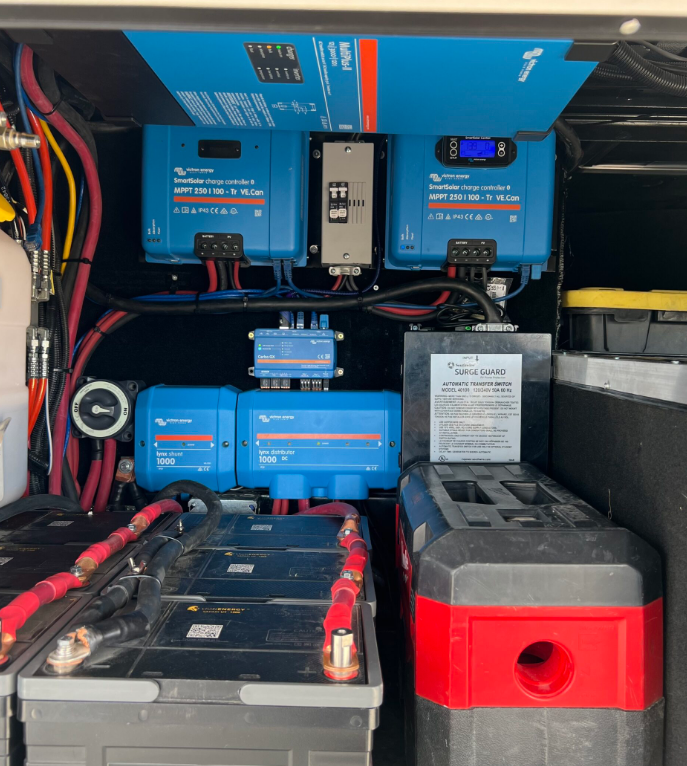
Hurricane preparation includes securing and protecting your RV's electrical systems. Most modern RVs operate on a combination of shore power (120V/30A or 50A), onboard generators, and battery banks. During a hurricane warning, shore power will be disconnected, and many owners evacuate with their RVs, leaving generators as the sole power source. A well-maintained generator and a properly sized battery bank with surge protection are non-negotiable for both comfort and safety. If your RV uses an Onan or Cummins generator, verify that fuel is fresh (add fuel stabilizer if storing the RV for more than 30 days), the oil level is correct, the air filter is clean, and the unit has been run for at least 30 minutes in the past month to ensure it starts reliably. For battery systems, check your monitor (whether you use a Victron, Battle Born, or Renogy display) to confirm capacity, state of charge, and any cell imbalance warnings. If your RV runs AGM (Absorbed Glass Mat) or LiFePO4 (lithium iron phosphate) batteries, verify that the battery management system (BMS) is functioning, the terminals are clean and tight, and all interconnecting cables are properly insulated and protected from chafing. Port St. Lucie RV Repair provides comprehensive electrical inspections and battery system diagnostics starting at $150 - $350. Our RV Electrical Repair services include load testing, surge protection installation, and generator conditioning to ensure your power systems operate flawlessly during and after a storm.
Surge protection is critical in Port St. Lucie and across the Treasure Coast. Lightning strikes and power surges during thunderstorms can destroy expensive onboard electronics, AC/DC converters, and appliances. A hardwired surge protector (not just a power cord surge protector) should be installed at the shore power inlet, typically costing $80 - $200 installed. Additionally, unplug exterior electronics and remove any loose antennas or satellite dishes that could be torn away by wind or struck by flying debris. If your RV has a Carefree or Solera power awning, confirm that it can be fully retracted and locked in place. Power awnings are not designed to withstand hurricane-force winds and must be stowed completely.
HVAC, Plumbing, and Water System Winterization
Even though Port St. Lucie rarely freezes, hurricane prep involves ensuring your RV's climate control and water systems can survive the storm and its aftermath. Many hurricane evacuations or storm sheltering scenarios leave RVs without shore power for extended periods. Your air conditioning (whether a rooftop Dometic unit or an under-roof Truma system) will not operate without power. However, your heating system should work on propane if needed. Verify that your propane tank is at least 75 percent full, the supply line is secure and leak-free, and your heating system (Suburban, Atwood, or Truma) starts reliably when tested. Propane does not expire, but regulators and lines degrade over time in the salt air, so have these inspected annually. If you plan to shelter in place in your RV during a hurricane, propane heaters and stoves should never be used as primary heating because they consume oxygen and produce carbon monoxide. Our RV AC & Heating Repair services include propane system safety inspections, thermostat calibration, and component replacement at rates of $120 - $400 depending on the issue.
Your freshwater and waste systems require special attention. Before hurricane season, have your water tank cleaned and sanitized to prevent bacterial growth and odors if the RV sits unused for extended periods. Inspect all PEX water lines for cracks, leaks, or areas where they contact sharp edges. PEX is flexible and durable, but repeated pressure surges during storms can cause micro-tears. The grey and black water tanks should be pumped out before any extended storm sheltering. Many owners in St. Lucie West and Tradition maintain a reserve of bottled water (one gallon per person per day for at least three days) and sanitized water containers in case municipal systems are disrupted post-storm. Check your toilet's seal and operation; a Thetford or Dometic toilet should flush smoothly and seal properly to prevent odors and seepage. These plumbing inspections and repairs typically cost $100 - $350. See our RV Plumbing Repair page for full details.
Tire, Brake, and Hitch System Verification
If your RV is towed or if you're preparing to evacuate, your tire and brake systems must be in perfect condition. Salt-air environments like Port St. Lucie accelerate sidewall cracking and UV degradation of tires, even if tread depth is adequate. Inspect all tires (including spares) for cracks, bulges, uneven wear, or low pressure. Tires sitting in the sun for extended periods can overheat and fail suddenly during a long evacuation drive. Tire pressure should be checked cold (before the RV is moved) and adjusted to the sidewall-recommended PSI, not the maximum. If your RV will be stored during hurricane season, overinflate tires by 2 - 3 psi to compensate for slow leakage; if you plan to evacuate, ensure tires are at specification and have been rotated within the past six months. Brake systems on towed RVs should be inspected annually, with hydraulic fluid flushed and replaced every two years in high-humidity climates like ours. Lippert and Schwintek are leading manufacturers of RV chassis and brake components; their systems require regular maintenance to function safely under load during an evacuation. Our RV Hitch & Leveling Repair services include brake system inspection, hitch ball verification, and electrical connection testing, typically costing $150 - $400 for a full inspection and any needed adjustments. Same-day service is available in Port St. Lucie, Tradition, and St. Lucie West.
Hurricane Prep Checklist - Step-by-Step Actions
Schedule a Professional Hurricane-Prep Inspection (June - July)
Contact Port St. Lucie RV Repair by phone at 772-276-6465 or email [email protected] to book a comprehensive inspection. We serve Port St. Lucie, Tradition, St. Lucie West, Tesoro, PGA Village, Stuart, Fort Pierce, Jensen Beach, Palm City, Hobe Sound, Hutchinson Island, and Vero Beach. Inspections typically take 2 - 3 hours and cost $150 - $300, with no trip fee for addresses within 15 miles of our Port St. Lucie location (zip 34952). The inspection covers roof seals, electrical systems, water systems, propane systems, HVAC operation, tires, brakes, and overall structural integrity. Any repairs identified can be addressed immediately, often on the same day.
Seal and Repair All External Cracks and Gaps (July - August)
Work with your technician to prioritize repairs. Roof and sidewall seals are the highest priority, followed by window seals, door weather stripping, and compartment gaskets. Dicor sealants and coatings are industry standard. Expect roof resealing to take 4 - 6 hours and cost $200 - $600. Smaller seal repairs (windows, doors, vents) cost $75 - $200 per area. Completion before August 31 ensures you have no urgent work hanging over you as Atlantic hurricane season peaks.
Test and Service Generators, Batteries, and Electrical Systems (August)
Have your generator load-tested and serviced. If using Dometic, Suburban, or Atwood appliances, verify all controls and safety switches function. Install surge protection if not already in place. Test your battery bank and monitor (Victron, Battle Born, or Renogy). Ensure all DC and AC breakers trip and reset correctly. These services cost $120 - $350 and prevent electrical failures that could leave you without power during the critical post-storm period.
Fill Propane, Clean Water Tanks, and Stock Supplies (Late August)
Top off your propane tank to at least 75 percent capacity. Have your freshwater tank cleaned and sanitized. Inspect and flush your black and grey water tanks. Stock non-perishable food, bottled water, medications, first aid supplies, flashlights, batteries, and important documents in waterproof containers. Confirm your RV's insurance covers hurricane damage and your coverage limits are adequate.
Create an Evacuation and Sheltering Plan (September)
Decide whether you will evacuate or shelter in place if a hurricane threatens Port St. Lucie. If evacuating, identify three evacuation routes and destination campgrounds with available spots. If sheltering, ensure your RV has adequate fuel, water, food, and medications for at least one week off-grid. Share your plan with family and emergency contacts. Monitor the National Hurricane Center weekly during season, and be prepared to act within 48 hours of a major storm forecast.
Comparing Hurricane-Prep Repair Costs and Timelines
| Service | Typical Cost Range | Time Required | Priority Level |
|---|---|---|---|
| Roof seal inspection and resealing | $200 - $600 | 4 - 6 hours | Critical |
| Electrical system inspection and surge protection | $150 - $350 | 2 - 3 hours | Critical |
| Generator service and load testing | $100 - $250 | 1 - 2 hours | Critical |
| Battery bank diagnostic and BMS check | $75 - $150 | 1 hour | Critical |
| Propane system inspection and leak test | $75 - $150 | 1 hour | Critical |
| Water tank cleaning and sanitization | $100 - $200 | 1 - 2 hours | Important |
| Plumbing inspection and repair | $100 - $350 | 1 - 3 hours | Important |
| HVAC system inspection and service | $120 - $300 | 1 - 2 hours | Important |
| Tire inspection and rotation | $75 - $150 | 1 - 2 hours | Important |
| Brake system inspection (towed RVs) | $150 - $250 | 1 - 2 hours | Important |
| Hitch ball and electrical connector check | $50 - $100 | 30 minutes | Moderate |
| Window and door weather stripping replacement | $75 - $200 per area | 30 minutes - 1 hour each | Moderate |
The total investment in comprehensive hurricane prep for an average RV typically ranges from $1,200 - $3,000, depending on the RV's age, condition, and system complexity. This is a fraction of the cost of hurricane damage claims, which average $5,000 - $25,000 for a typical RV. Port St. Lucie RV Repair offers package pricing for full hurricane-prep inspections and repairs; contact us at 772-276-6465 for a custom quote. Service trip fees are waived for jobs exceeding $400 in labor within the Port St. Lucie and Tradition areas.
Snowbird and Seasonal RV Storage Considerations
If you're a snowbird who winters in Port St. Lucie or nearby areas like Stuart, Jensen Beach, or Hutchinson Island, hurricane prep extends to proper storage if you leave during the season. Many RV owners store their units at facilities in Palm City, Tesoro, or PGA Village during summer months when hurricanes are most likely. When placing an RV in storage, ensure all systems are winterized or properly preserved. Drain and treat water systems with non-toxic RV antifreeze to prevent bacterial growth and corrosion. Run the engine and generator monthly to keep fuel fresh and seals lubricated. Disconnect the battery or use a smart trickle charger (compatible with your AGM or LiFePO4 chemistry) to maintain charge without overcharging. Block the RV on concrete pads rather than allowing tires to sink into asphalt, which can cause flat-spotting and sidewall damage. Cover the RV with a breathable, UV-resistant tarp to minimize sun and salt-spray exposure. Many storage facilities in St. Lucie County now offer hurricane-hardened structures with tie-down systems; these are worth the premium during peak season. If you store your RV locally and need pre-departure or post-return inspections, Port St. Lucie RV Repair provides fast turnaround service.
Salt-Air Corrosion Prevention Year-Round
Port St. Lucie's proximity to the Atlantic Ocean and the Indian River Lagoon means your RV is exposed to salt spray and high humidity year-round, not just during hurricane season. Salt-air accelerates corrosion of aluminum, steel, copper, and electronic components. Beyond hurricane-specific prep, implement a year-round corrosion prevention regimen. Wash your RV monthly with fresh water and a soft brush, paying special attention to the undercarriage, hitch, propane connections, and electrical connectors. Use a protective coating (such as a clear wax or marine-grade sealant) on all aluminum and steel surfaces. Inspect under your RV quarterly for rust, corrosion, or water accumulation. Ensure your RV is parked in a covered shelter or under a quality carport rather than exposed to constant sun and salt spray. Battery terminals, brake lines, and electrical connectors should be inspected annually and treated with a dielectric grease to prevent corrosion. Many owners in Vero Beach, Hutchinson Island, and Fort Pierce report that investing in preventive corrosion treatment extends the lifespan of their RVs by five to ten years and reduces repair costs significantly. Our technicians at Port St. Lucie RV Repair are trained in salt-air corrosion mitigation and can advise you on the best practices for your specific RV model and components.
When to Call a Professional vs. DIY Prep Tasks
Some hurricane-prep tasks can be safely handled by RV owners with mechanical aptitude; others require professional expertise and specialized tools. DIY tasks include checking tire pressure, visually inspecting for obvious cracks or leaks, cleaning water tanks, stocking supplies, and confirming that slide-out mechanisms move smoothly. However, do not attempt to reseal your roof, install surge protection, service your generator, or work on propane systems unless you have professional training. Roof resealing requires knowledge of proper sealant application, ventilation clearances, and the specific requirements of TPO or EPDM membranes. Propane work is regulated and dangerous if performed incorrectly. Generator servicing requires load-testing equipment. Electrical system upgrades demand understanding of 120V and 12V systems, breaker ratings, and code compliance. Professional technicians have liability insurance, manufacturer certifications (RVIA), and years of experience with the nuances of RV systems in Florida's climate. The $150 - $400 cost of a professional inspection is cheap insurance against costly mistakes or missed issues that could compromise safety and comfort. Port St. Lucie RV Repair is RVIA-certified and operates across St. Lucie County and the greater Treasure Coast with same-day availability in Port St. Lucie, Tradition, and St. Lucie West.
Post-Hurricane Recovery and Damage Assessment
After a hurricane passes, do not immediately inspect exterior damage from a ladder or roof unless you have professional training. Wait 24 - 48 hours for conditions to stabilize, then walk around your RV at ground level and photograph any visible damage. Check for roof leaks, blown-out windows, bent awning arms, or structural deformation. If you sheltered in place, document any water intrusion, mold growth, or system failures. Before moving your RV, inspect tires, brakes, and electrical connections. Do not attempt to drive through standing water or flooded roads, as this can damage brake systems and electrical components. File damage claims promptly with your insurance company and request professional inspection. Port St. Lucie RV Repair offers rapid post-hurricane damage assessment and emergency repairs, often within hours of storm passage. We have deployed emergency response teams after major hurricanes to assist stranded RV owners across Port St. Lucie, Stuart, Fort Pierce, and surrounding areas. Contact us immediately if you need assistance: 772-276-6465 or [email protected].
Why Choose Port St. Lucie RV Repair for Your Hurricane Prep
- RVIA Certification: We are certified by the Recreational Vehicle Industry Association, the gold standard for RV repair quality and ethics. Our technicians stay current on the latest systems and best practices.
- Local Expertise: Based at 10157 S Federal Hwy, Port St. Lucie, FL 34952, we understand the unique challenges of the Treasure Coast climate, including salt-air corrosion, humidity, and hurricane risk.
- Mobile Service: We come to you across Port St. Lucie, Tradition, St. Lucie West, Tesoro, PGA Village, Stuart, Fort Pierce, Jensen Beach, Palm City, Hobe Sound, Hutchinson Island, and Vero Beach. No trip fee for locations within 15 miles of 34952; trips beyond that are $1.25 per mile, waived on jobs exceeding $400 in labor.
- Same-Day Availability: In Port St. Lucie and nearby areas, we typically schedule same-day appointments for inspections and non-major repairs. This means you don't have to wait until peak season to get your RV ready.
- Comprehensive Services: From roof and plumbing to electrical, HVAC, and structural work, we handle the full spectrum of RV repair and maintenance. You can address all hurricane-prep items in one engagement.
- Transparent Pricing: We provide detailed estimates before work begins and explain exactly what each repair addresses. No hidden charges or surprise invoices.
- 4.9-Star Rating: With 189 verified reviews, our customers consistently praise our professionalism, reliability, and quality of work. Read testimonials at our main website.