Port St. Lucie RV Repair diagnoses and fixes all RV electrical problems on-site across Port St. Lucie, FL and the Treasure Coast. Shore power, 12V systems, converters, breaker panels, wiring - we bring the tools to you.
Port St. Lucie RV Repair handles all RV electrical repair in Port St. Lucie, FL and across the Treasure Coast. Shore power, 12V DC systems, converters, inverters, breaker panels, GFCI outlets, slide-out motors, and appliance wiring. We diagnose and fix at your location. Call 772-276-6465 for same or next-day service. Also see our full RV repair services.
RV electrical systems are split between 120V AC (shore power, outlets, A/C) and 12V DC (lights, water pump, slides, control boards). When something goes wrong, it can knock out half the coach. We troubleshoot both sides every week here in Port St. Lucie, FL and across St. Lucie County. Here's what we fix and what it typically costs.
30-amp and 50-amp shore power connections, damaged power cords, corroded inlets, and transfer switch failures. We see a lot of automatic changeover relays that stick or burn contacts, especially after a summer storm surge on the Treasure Coast. If your RV won't take power from the pedestal, this is where we start.
$120-280 parts + labor - 45-90 minDead batteries, parasitic draws that kill the bank overnight, converter not charging, battery isolators that failed, and battery bank wiring that's corroded or undersized. We test converter output, measure parasitic draw with a clamp meter, and load-test the batteries. If the batteries are toast, we'll tell you straight.
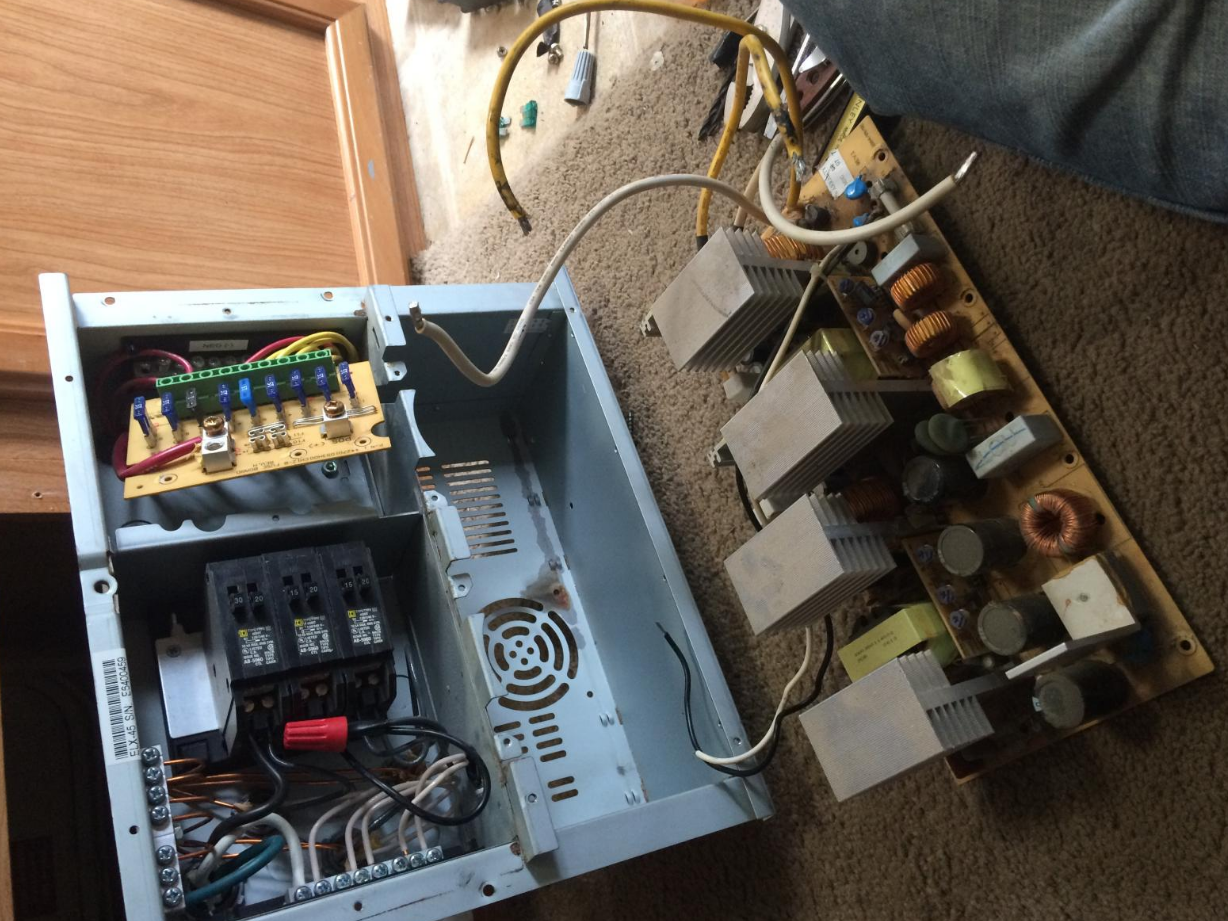
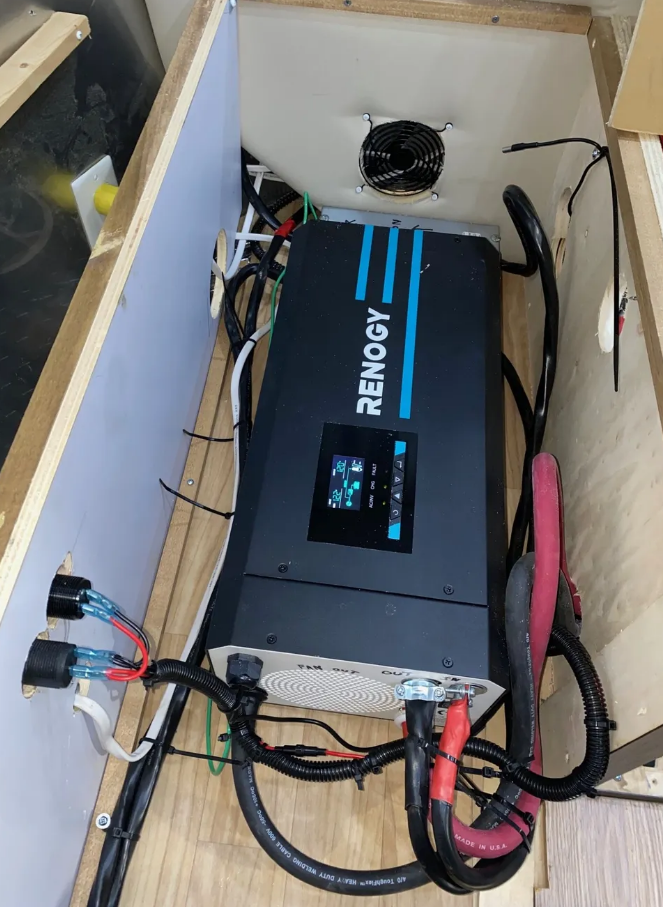
$80-200 parts + labor - 30-60 minWe work on Progressive Dynamics, WFCO, and Parallax converters - the three brands that cover about 90% of the RVs we see. Inverter troubleshooting and replacement too. A failing converter board is one of the most common causes of dead batteries on rigs that are plugged in.
$150-350 parts + labor - 60-120 minBreakers that trip under normal load, blown fuses, corroded bus bars, and panel upgrades. We see a lot of 30-amp rigs where the owner tries to run the A/C and microwave at the same time - that's not a panel problem, that's a load management conversation. But when breakers trip at random or bus bar connections are black and pitted, that's real and we fix it.
$100-250 parts + labor - 45-90 minDead outlets, GFCI trips that won't reset, open grounds, reverse polarity, and outlet replacements. Florida's humidity is brutal on outlet contacts, especially in rigs parked near the coast. We test every outlet on the circuit to find the actual fault instead of just resetting the trip button over and over.
$80-180 parts + labor - 30-60 minLippert, Schwintek, and hydraulic slide motors. Electric entry step motors and controllers. A slide that won't extend or retract is more than an inconvenience - it can trap you inside or leave your interior exposed. We diagnose the motor, controller, and wiring to find the actual point of failure before throwing parts at it.
$150-400 parts + labor - 60-120 minInterior lights, exterior lights, dimmer switches, awning lights, and LED conversions. Older rigs with incandescent bulbs pull a lot more current than they need to. We swap in LEDs, fix flickering connections, and replace corroded light fixtures. A full LED conversion can cut your 12V lighting draw by 80% or more.
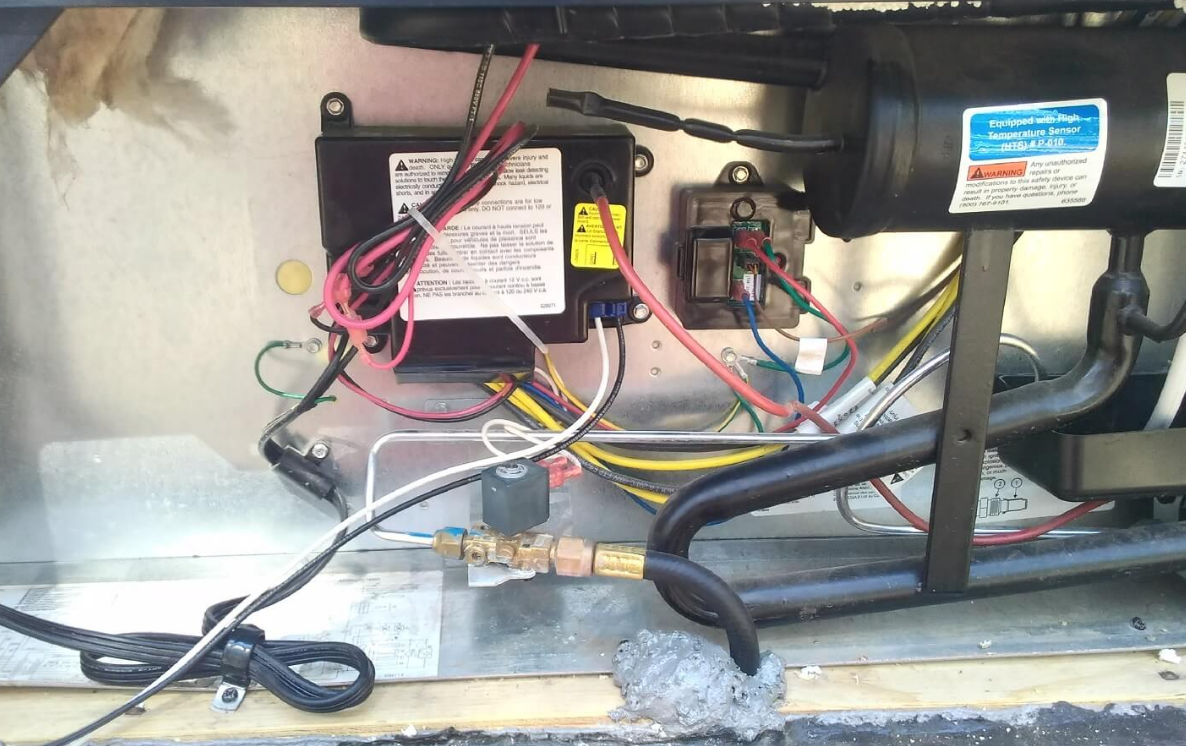
$60-150 parts + labor - 30-60 minRefrigerator control boards (Norcold, Dometic), microwave wiring, water heater electrical connections, and A/C control boards. When an appliance stops working, it's not always the appliance itself - sometimes it's the wiring, relay, or control board feeding it. We trace the circuit before recommending a replacement.
$100-300 parts + labor - 45-90 minYou plug in and nothing happens. No lights, no A/C, nothing. Could be a bad cord connection, a tripped main breaker, or a failed transfer switch relay. Don't keep plugging and unplugging - that can arc and damage the inlet.
Every time you run the A/C or microwave, the breaker pops. Either you're overloading the circuit, there's a short somewhere in the wiring, or the breaker itself is worn out and tripping below its rated amperage.
If your 12V battery is dead every morning despite being on shore power, the converter probably isn't charging properly. Could also be a parasitic draw from a component that stays active when it shouldn't. We see this constantly.
A GFCI that trips over and over usually means there's moisture in a downstream outlet, a ground fault in an appliance, or the GFCI itself is shot. In Florida's coastal humidity, this is one of the most common calls we get.
Makes a clicking noise but doesn't move, or doesn't respond at all. Usually a motor failure, a bad controller, or a wiring issue at the connector. Don't force it manually unless you know what you're doing - you can damage the gear mechanism.
Call 772-276-6465 or submit an estimate request online. Tell us what's happening - no shore power, tripping breakers, dead battery, slide stuck. We'll give you a time window, usually same or next day across the Port St. Lucie and Treasure Coast area.
Our tech arrives with a multimeter, clamp meter, and a stocked truck. We trace the fault through your 120V AC and 12V DC systems, test connections, measure loads, and check every component in the circuit. You get a written estimate before we start any work. No guessing, no surprise bills.
Most RV electrical repairs are done in 1-2 hours. We carry breakers, GFCI outlets, Progressive Dynamics converter boards, relays, wiring supplies, and common control boards on the truck. If we have the part, it's fixed that visit. No ordering, no "come back next week."
Electrical problems don't wait for business hours. A dead RV in July heat with no A/C is a real emergency. We answer calls around the clock across St. Lucie, Martin, and Indian River counties and get someone out there as fast as possible.
All our techs are RVIA certified through the Recreation Vehicle Industry Association and hold current Florida state licenses. RV electrical work isn't the same as residential wiring - the systems, voltages, and safety standards are different. Credentials matter here.
We warranty all labor for 90 days. If something we repaired fails in that window, we come back and fix it at no charge. Parts carry the manufacturer's warranty on top of that. You're not calling us back in 30 days to argue about a repair that didn't hold.
No shore power at all, couldn't figure it out. Tech found a corroded transfer switch relay, replaced it on the spot. Back to full power in under two hours. Worth every penny.
Battery kept dying even when plugged in. Turned out the converter wasn't charging properly - bad circuit board. Tech had a Progressive Dynamics replacement and installed it same visit.
Slide-out motor burned out on our travel trailer. They sourced a Lippert replacement and came back next day to install it. Works perfectly. No shop visit needed.
Most RV electrical repairs run $60-400 depending on the problem. A GFCI outlet replacement is $80-180. Shore power and transfer switch repairs run $120-280. Converter or inverter work is $150-350, and slide-out motor replacement can run up to $400 depending on the brand. We always write up an estimate before starting - no surprises.
No power from shore hookup usually means a bad cord connection, a tripped breaker at the pedestal or inside the RV, a failed transfer switch relay, or corroded shore power inlet contacts. We check the pedestal first, then trace through the cord, inlet, transfer switch, and main panel. Most of the time it's a connection issue or a relay that's gone bad.
A breaker that trips repeatedly usually means you're pulling more amps than the circuit handles, there's a short in the wiring, or the breaker itself is worn out and tripping below its rating. Running the A/C and microwave at the same time on a 30-amp service is the most common version of this. We test the circuit load, check for shorts, and replace weak breakers if needed.
Yes, almost every RV electrical repair we do happens on-site at your campsite, driveway, RV park, or storage facility. We carry breakers, GFCI outlets, converter boards, wiring supplies, relays, and common control boards on the truck. You don't need to tow to a shop. The whole point of our mobile RV repair service is that we come to you.
A battery that dies overnight when plugged in usually points to a converter that's not charging properly, a bad battery isolator, or a parasitic draw from a component that stays on when it shouldn't. We test converter output voltage, measure parasitic draw with a clamp meter, and check battery condition. A failing Progressive Dynamics or WFCO converter board is one of the most common culprits.
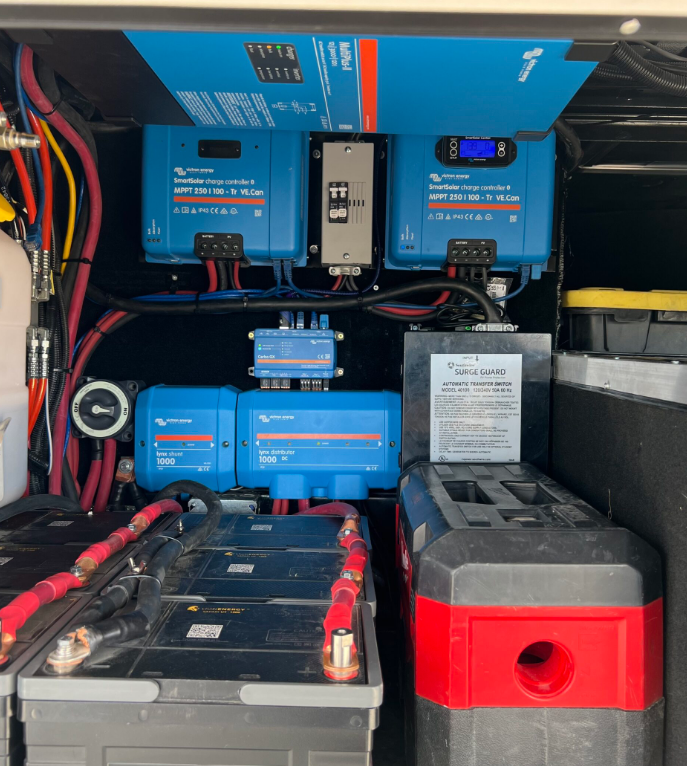
We handle basic solar troubleshooting - charge controller issues, wiring faults between panels and batteries, and inverter problems. For full solar installations or major system upgrades, we'll refer you to a dedicated solar installer. But if your existing system stopped charging or the controller is throwing errors, we can diagnose and fix that on-site.
Most repairs finish in 45 minutes to 2 hours. A GFCI outlet swap takes about 30 minutes. Shore power diagnosis and transfer switch repair runs 45-90 minutes. Converter replacement is 60-120 minutes. Slide-out motor replacement can take up to 2 hours depending on access. We'll give you a realistic time estimate after diagnosis - no vague "a few hours" windows.
A GFCI that keeps tripping usually means there's a ground fault somewhere downstream on that circuit, moisture got into an outlet or appliance, or the GFCI outlet itself has gone bad. In Florida's humid climate we see moisture-related trips constantly, especially on rigs parked near the Treasure Coast. We test each device on the circuit to isolate the fault, then fix the root cause instead of just resetting it over and over.
We cover St. Lucie, Martin, and Indian River counties for all RV electrical repairs. From Vero Beach and Sebastian down through Fort Pierce, Port St. Lucie, Stuart, Palm City, and Jensen Beach.
Call us or request a free estimate and we'll get a technician out to your site. Most electrical repair appointments are available same or next day across the Treasure Coast. No towing, no shop wait.