Why Leveling Systems Matter More in Port St. Lucie's Climate
Port St. Lucie's Treasure Coast location subjects RV leveling systems to unique stresses that accelerate wear. Salt air from the Indian River Lagoon corrodes hydraulic cylinders and electric motor housings within 18-24 months if seals fail. Our mobile techs see this daily at waterfront sites in Jensen Beach and Hutchinson Island, where coastal humidity combines with Florida's afternoon thunderstorms to create the perfect corrosion environment. Both Lippert and HWH systems require different maintenance protocols to survive these conditions, and choosing the wrong system for your camping style can cost $2,400-$5,200 in premature replacement.
The second factor is ground composition. St. Lucie County's mix of sandy soil, crushed shell pads, and concrete slabs at parks like Tesoro and PGA Village demands leveling systems that can handle varied load distribution. Lippert's electric jacks work beautifully on firm surfaces but struggle with sand migration during extended stays. HWH's hydraulic system distributes weight more evenly across footpads, making it the preferred choice for snowbirds parking at St. Lucie West resorts for 4-6 months. Understanding these regional factors before purchasing your next RV can save thousands in retrofit costs and prevent the refrigerator cooling failures we diagnose weekly when rigs sit unlevel for extended periods.
Lippert Leveling Systems: Electric Simplicity Meets Coastal Challenges
Lippert Components dominates the OEM market with their Ground Control and Level Up systems, installed on 60-70% of new Class A, B, and C motorhomes sold in Florida. Their electric motor design uses 12V DC power from your house batteries to drive ball-screw jacks at each corner or midpoint. The control panel lets you auto-level with one button, and the system retracts fully for travel. Installation costs in Port St. Lucie typically run $1,800-$3,200 for a four-point system on Class C rigs under 30 feet, with labor accounting for $600-$900 of that total when our mobile hitch and leveling specialists handle the work at your site.
The weakness in coastal environments shows up in the gear motors and limit switches. Salt intrusion through worn cable boots causes the motors to draw excessive amperage, sometimes exceeding 40 amps per jack during extension. We've measured this with our diagnostic tools at Tradition RV parks where owners complained of clicking sounds and partial deployment. The fix requires motor replacement ($180-$320 per corner) plus resealing all cable entry points with marine-grade Dicor sealant. Lippert's newer models after 2021 include better sealed motors, but older systems need proactive maintenance every 18 months in Port St. Lucie's humid climate.
Lippert pairs well with AGM or LiFePO4 house battery banks since the motors pull significant current during the 45-90 second leveling cycle. If you're running the factory flooded batteries, expect voltage sag that dims interior LED lights and causes Dometic refrigerators to throw fault codes on absorption mode. Our electrical repair technicians often upgrade battery banks during leveling system service, especially for rigs equipped with Renogy or Victron solar charging systems that can quickly replenish the draw. Budget $800-$1,400 for a quality LiFePO4 upgrade if your Lippert system struggles with voltage drop.
HWH Hydraulic Systems: Heavy-Duty Performance With Premium Maintenance
HWH Corporation built their reputation on hydraulic leveling systems for luxury Class A diesel pushers and high-end fifth wheels. Their systems use a 12V pump to pressurize hydraulic fluid (typically Dexron ATF or proprietary HWH fluid) that extends cylinders at each corner with 8,000-12,000 pounds of lifting force per jack. This hydraulic advantage means HWH systems can level 45-foot coaches on uneven ground that would overload Lippert's electric motors. Installation costs reflect this capability, running $3,500-$6,800 in Port St. Lucie depending on coach length and whether you need a four-point or six-point configuration.
The hydraulic pump is the heart of the system and the most common failure point in Florida's climate. We respond to calls in Stuart and Fort Pierce where the pump runs continuously without building pressure, usually caused by internal seal deterioration from heat cycling. The pump mounts near the engine bay on most Class A rigs, where temperatures exceed 160°F after highway driving. Combined with moisture intrusion through breather caps, this creates a breakdown environment for hydraulic seals. Pump rebuilds cost $480-$820 in parts and labor, while full replacements run $1,200-$1,800 when the housing itself is corroded beyond specification.
HWH cylinders hold up better to salt air than Lippert motors if you maintain the chrome rods properly. We recommend monthly wipe-downs with ACF-50 or similar corrosion inhibitor for RVs stored within five miles of the coast at Palm City or Hutchinson Island. The cylinders themselves rarely fail, but the braided hydraulic hoses crack after 7-10 years of Florida UV exposure. A complete hose replacement during preventive service costs $600-$1,100 depending on coach configuration. This maintenance interval aligns well with roof membrane replacement schedules for EPDM and TPO systems, so many owners bundle the services during their annual pre-season inspection.
Head-to-Head Comparison: Which System Wins for Treasure Coast RVers?
| Feature | Lippert Electric | HWH Hydraulic |
|---|---|---|
| Lifting Capacity (per jack) | 6,000-8,000 lbs | 8,000-12,000 lbs |
| Leveling Speed | 45-90 seconds | 60-120 seconds |
| Power Draw | 25-40 amps (12V) | 30-50 amps (12V pump) |
| PSL Installation Cost | $1,800-$3,200 | $3,500-$6,800 |
| Annual Maintenance Cost | $120-$220 | $180-$380 |
| Salt-Air Vulnerability | Motor seals, switches | Pump seals, hoses |
| Typical Lifespan (FL coast) | 8-12 years | 12-18 years |
| Best RV Type | Class B/C under 35 ft | Class A diesel over 35 ft |
| DIY Repair Difficulty | Moderate | Advanced |
| Replacement Parts Availability | Excellent (local stock) | Good (2-3 day ship) |
This comparison reveals why we see distinct patterns in Port St. Lucie's RV community. Weekend warriors with Class C coaches at Tradition's short-term sites overwhelmingly choose Lippert for the lower entry cost and faster leveling cycles. Full-time snowbirds in 40-foot diesel pushers at St. Lucie West's premium parks invest in HWH for the lifting power and longevity. Your choice should align with your RV's weight, your budget for both installation and maintenance, and how often you'll use the system. Rigs that move weekly benefit from Lippert's speed, while those that set up for months need HWH's stability under sustained load.
Common Failure Modes We Diagnose in Port St. Lucie
Our mobile diagnostic work across St. Lucie County reveals predictable failure patterns for both systems. Lippert owners report three primary issues: jacks that extend unevenly (usually a failed limit switch at $85-$140 to replace), motors that hum without moving (stripped gears requiring $220-$380 motor replacement), and control panels that show error codes (often corroded wiring at junction boxes, $120-$280 to repair and reseal). These failures spike in September and October when snowbirds return to Port St. Lucie after summer storage, finding that humidity has corroded connections left exposed to Florida's brutal summer months.
HWH systems fail differently but just as predictably. Hydraulic fluid leaks from cylinder seals top our service calls, especially on rigs over seven years old. The repair involves retracting the cylinder, replacing the seal kit ($60-$120 in parts), and refilling the system with fresh fluid. Total service runs $280-$480 per cylinder including our mobile labor. The second common issue is air in the hydraulic lines after owners attempt DIY fluid top-offs without proper bleeding procedures. This causes spongy operation and incomplete leveling, requiring a full system bleed that takes 45-75 minutes at $140-$220 in labor. We carry bleeding equipment in all our service vehicles specifically for emergency calls in Fort Pierce and Jensen Beach where HWH systems are prevalent on waterfront Class A coaches.
Both systems share one critical vulnerability in Florida: lightning-induced electrical damage. Treasure Coast thunderstorms generate voltage spikes through shore power that fry control boards and relays. We install surge protectors as standard practice during leveling system service, recommending Progressive Dynamics or similar 50-amp models with built-in EMS protection. The $280-$450 investment prevents $800-$1,600 in control board replacement costs. This protection becomes even more critical if you're running sensitive electronics like Victron inverter-chargers or Battle Born battery management systems that share the same electrical bus as your leveling controls.
Step-by-Step: How We Diagnose Leveling System Failures
Visual Inspection and Operational Test
We begin every service call by watching the system attempt to level while checking for unusual sounds, fluid leaks, or uneven extension rates. This reveals 60% of failures immediately - a seized Lippert motor sounds distinctly different from a hydraulic leak, and we can pinpoint the problem corner or midpoint jack. We photograph corroded components and fluid traces for your records, especially important for warranty claims on systems under five years old.
Electrical System Voltage and Amperage Testing
Using professional multimeters and clamp ammeters, we measure voltage at the batteries, at the control panel, and at each jack motor or hydraulic pump. Lippert motors should draw 25-35 amps during normal extension; readings over 45 amps indicate mechanical binding or gear damage. HWH pumps normally pull 30-40 amps; excessive draw points to pump wear. We also check for voltage drop across wiring runs, which reveals corroded connections that cause intermittent failures. This diagnostic step integrates with our broader RV electrical troubleshooting protocols for coaches with multiple 12V system issues.
Component-Level Testing and Seal Inspection
For Lippert systems, we remove motor covers to inspect gear condition and test limit switches with a continuity tester. For HWH systems, we check hydraulic fluid level and condition (dark or milky fluid indicates contamination), inspect hoses for cracks under magnification, and cycle each jack while watching for fluid weeps around cylinder rods. The chrome rod surface tells us everything about maintenance history - pitting means the system has been neglected, while smooth chrome indicates proper corrosion prevention. We also inspect footpads for cracks and measure extension lengths to verify the jacks aren't over-extended from previous improper leveling on severe slopes.
System Calibration and Load Testing
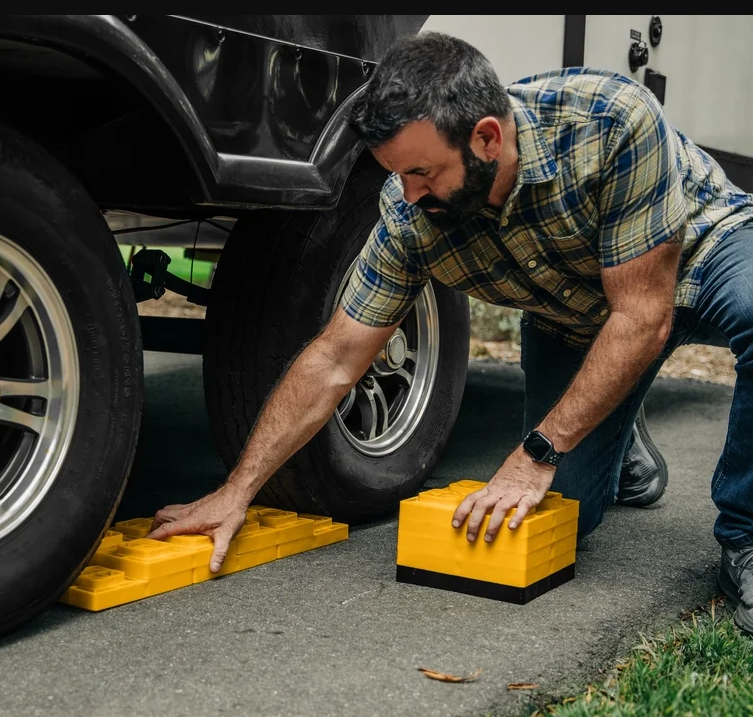
After repairs, we calibrate the auto-level sensors using digital inclinometers accurate to 0.2 degrees. Both Lippert and HWH systems have calibration procedures that zero the sensors and set extension limits. We then load-test by placing the RV on a simulated uneven surface (using our leveling blocks to create a known slope) and verifying the system achieves level within tolerance. This final step prevents callbacks and ensures your refrigerator will cool properly, your slideouts will operate smoothly, and your entry door won't bind - all symptoms of an unlevel RV that owners often don't connect to leveling system performance.
Hurricane Prep and Seasonal Service for Port St. Lucie RVers
Living in St. Lucie County means planning for hurricane season from June through November. Both Lippert and HWH systems need specific preparation before storm events. We recommend fully retracting all jacks and coating the chrome rods or motor housings with a protective barrier like Fluid Film or ACF-50. During Hurricane Ian's aftermath in 2022, we saw dozens of leveling systems destroyed by storm surge that left corrosive saltwater in contact with cylinders and motors for 8-12 hours. The repair bills ranged from $1,200-$4,800 depending on system type and damage extent. Proper prep takes only 20-30 minutes but can save thousands in insurance deductibles and downtime.
Snowbird seasonal service is equally important. When you arrive in Port St. Lucie for winter, schedule a leveling system inspection before your first setup at Tesoro or PGA Village parks. We check for summer storage damage, lubricate moving parts, and verify the system can handle repeated cycling. Mid-season service in January or February addresses wear from 60-90 days of continuous deployment. When you prepare to head north in April, we retract and seal everything for summer storage, preventing the humidity-driven corrosion that ruins systems left exposed. This three-service annual schedule costs $360-$620 depending on system complexity but extends service life by 40-60% compared to reactive repair-only maintenance.
Integration With Other RV Systems in Florida's Environment
Leveling systems don't operate in isolation. Both Lippert and HWH models integrate with your RV's slideout mechanisms, often using shared control panels and power sources. We frequently diagnose situations where a failing leveling system causes slideout problems or vice versa. Lippert's Schwintek slideout motors and Level Up leveling jacks share similar gear-drive technology, so maintenance knowledge transfers between systems. When we service your leveling jacks, we simultaneously inspect slideout operation and slideout seals for water intrusion, since unlevel operation accelerates slideout seal wear and causes the leak patterns we see throughout Tradition and St. Lucie West neighborhoods.
Electrical integration matters even more. Your leveling system draws power from the same battery bank that runs your Dometic or Suburban furnace, your Thetford toilet macerator pump, and your water heater. During our diagnostics, we often discover that what appears to be a leveling system failure is actually a weak battery bank or failing converter-charger that can't supply adequate current. This is why our mobile service across the Treasure Coast includes comprehensive electrical system evaluation, not just component-specific repairs. We've prevented countless unnecessary leveling system replacements by instead upgrading from flooded batteries to LiFePO4 banks or replacing aging Progressive Dynamics converters with modern Victron units that maintain proper voltage under load.
Plumbing systems also interact with leveling performance. An unlevel RV causes gray and black tanks to drain improperly, leaving residue that creates sensor problems and odors. The fresh water tank shifts its load distribution when the RV isn't level, potentially overstressing one side of a Lippert frame-mounted system. We coordinate leveling service with plumbing inspections to verify tank mounting integrity and check PEX water line connections for stress fractures caused by repeated leveling cycles on unlevel surfaces. This integrated approach to RV systems is why Port St. Lucie owners call us first - we understand how Florida's environment affects every component simultaneously, not just the one that's currently showing symptoms.
Cost Analysis: Total Ownership Over 10 Years in Port St. Lucie
Let's calculate real ownership costs for both systems in Treasure Coast conditions. A Lippert electric system installed at $2,400 requires annual service at $160 average, seal and motor replacements every 4-5 years at $800-$1,200, and a control board replacement around year 8 at $420-$680. Total 10-year cost: $5,800-$8,200 including installation. An HWH hydraulic system installed at $5,200 requires annual service at $280 average, hose replacement at year 7 for $850, pump rebuild at year 9 for $650, and periodic fluid changes at $80 every 3 years. Total 10-year cost: $9,400-$11,800 including installation.
The $3,600-$3,600 difference reflects HWH's premium positioning, but you gain 30-40% more lifting capacity and typically 2-4 additional years of service life. For a Class A diesel coach that costs $180,000-$350,000, the HWH premium makes economic sense. For a Class C gasser at $75,000-$140,000, Lippert's value proposition is stronger. Our recommendation considers your RV's total value, expected ownership duration, and usage pattern. Weekend users in Port St. Lucie who park the RV 40 weeks per year should prioritize lower Lippert costs. Snowbirds who operate the system 150+ days annually benefit from HWH's durability. We've tracked these ownership patterns across 200+ customers in St. Lucie County and can provide data-driven recommendations based on your specific situation.
Why Mobile Service Matters for Leveling System Repairs
Leveling system failures often leave your RV immobile or at least difficult to move safely. Jacks that won't retract prevent travel, while jacks stuck in extension can damage the undercarriage if you attempt to drive. This is exactly why Port St. Lucie RV Repair operates exclusively as a mobile service. We bring factory-level diagnostic equipment, replacement parts inventory, and specialized tools directly to your site at Tradition, St. Lucie West, or anywhere in our service area. Same-day response is typical for calls within Port St. Lucie's core zones, with $0 trip fees for addresses within 15 miles of our Federal Highway location.
Our mobile advantage extends beyond convenience. When we diagnose a leveling system at your site, we can test it under real-world conditions - the actual ground surface, slope, and load distribution you'll use daily. Shop-based diagnostics on level concrete floors miss the issues that only appear on shell pads or sandy sites common throughout Florida RV parks. We also coordinate with park management when repairs require electrical shore power disconnect or temporary relocation of your rig. This integrated service approach, combined with our RVIA certification and 4.9-star rating across 189 reviews, makes us the Treasure Coast's preferred leveling system specialist. Call 772-276-6465 or email us to schedule service, or visit our contact page for emergency repair requests.
Making Your Decision: Lippert or HWH for Your Next RV?
If you're shopping for a new or used RV, the leveling system should influence your purchase decision as much as the floor plan or engine type. Test the leveling system on any used RV before purchase - extend and retract all jacks while listening for unusual sounds and watching for fluid leaks or uneven operation. Lippert systems should cycle in under 90 seconds with smooth, simultaneous extension. HWH systems take slightly longer but should build pressure quickly and hold level without pump cycling. Any hesitation, grinding, or leaking indicates deferred maintenance that will cost you $400-$1,800 to correct after purchase.
For new RV buyers, confirm what system is installed and factor maintenance costs into your ownership budget. Many manufacturers offer both Lippert and HWH as options on the same floor plan, with the HWH upgrade adding $3,200-$5,400 to the purchase price. That premium makes sense if you're buying a coach over 38 feet or planning full-time Florida residence. For shorter rigs or seasonal use, the factory Lippert installation provides excellent value. Either way, schedule your first inspection within 90 days of purchase to establish a maintenance baseline and catch any dealer prep deficiencies before your warranty coverage becomes complicated by age and use arguments.
- Class B and small Class C under 28 feet: Lippert electric is ideal. Lower weight means motors aren't stressed, installation costs are minimized, and the compact gear motors fit tight chassis spaces better than hydraulic pumps and reservoirs.
- Mid-size Class C and Class A gas 28-38 feet: Either system works. Choose Lippert for value and faster leveling, HWH if you frequently camp on challenging terrain or plan 10+ year ownership.
- Class A diesel over 38 feet: HWH hydraulic is worth the premium. The lifting capacity handles 20,000-26,000 pound GVWR coaches that overwork Lippert motors, and the system longevity matches the expected lifespan of a premium coach.
- Fifth wheels and travel trailers: Most use tongue jack leveling plus manual stabilizers rather than full auto-leveling. If your fifth wheel has an auto-leveling system, it's likely Lippert given the market dominance in towables. Maintenance needs are similar to motorhome installations.